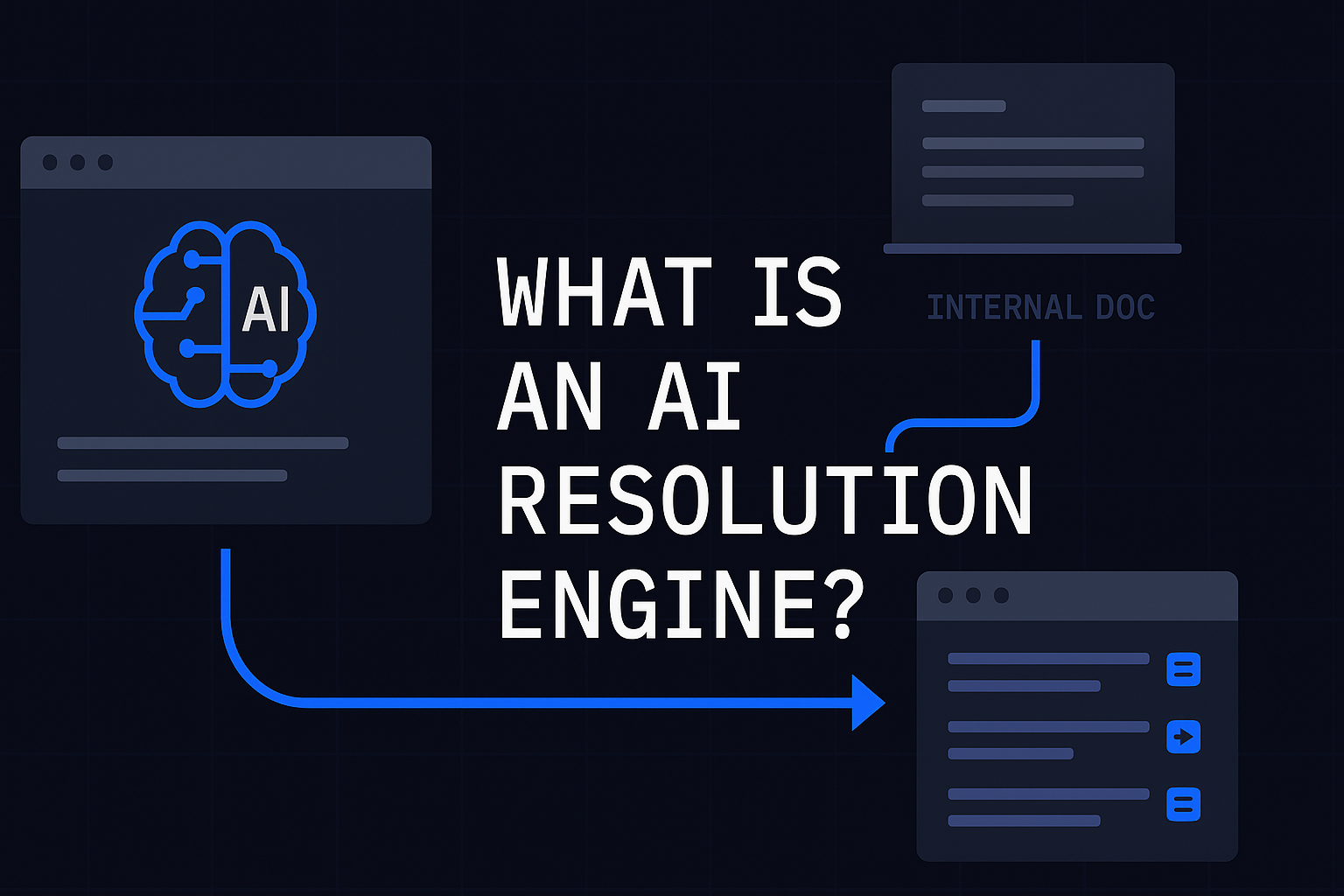
What Is an AI Resolution Engine?
By ResolvCmd
If you manage an IT service desk or MSP helpdesk, you’ve probably heard the pitch: “Just add AI to your ticketing system.” But most AI tools for IT support fall into one of two categories — chatbots that talk to end users, or copilots that help technicians write responses.
A resolution engine is neither. It’s a different category entirely.
The problem with current approaches
Most IT teams have good documentation. SOPs exist. Knowledge bases are populated. Procedures are written, reviewed, and stored in tools like IT Glue, Hudu, or Confluence.
The problem isn’t that the knowledge doesn’t exist. The problem is that it doesn’t show up when it’s needed.
When a ticket arrives, your technician doesn’t search the knowledge base. They ask the senior tech sitting next to them. They check Slack. They solve it from memory. The documentation sits unused — not because it’s bad, but because the workflow doesn’t surface it.
What a resolution engine does
A resolution engine closes that gap. It works like this:
- A ticket arrives in your ticketing system (Zendesk, Jira, ConnectWise, etc.)
- The engine reads the ticket context — the subject, description, tags, and any client information
- It searches your connected documentation — not the internet, not a generic model, your actual SOPs and procedures
- It produces a structured resolution — numbered steps, each linked to the specific source document it came from
- The resolution appears inside the ticket — your technician reviews it, edits if needed, and applies it
The key difference: the system initiates. The technician doesn’t need to “ask the AI” anything. The resolution is already there when they open the ticket.
How it differs from chatbots
A chatbot sits in a chat window and waits for someone to ask a question. It’s reactive. It requires the technician to formulate the right question, which assumes they already know roughly what they’re looking for.
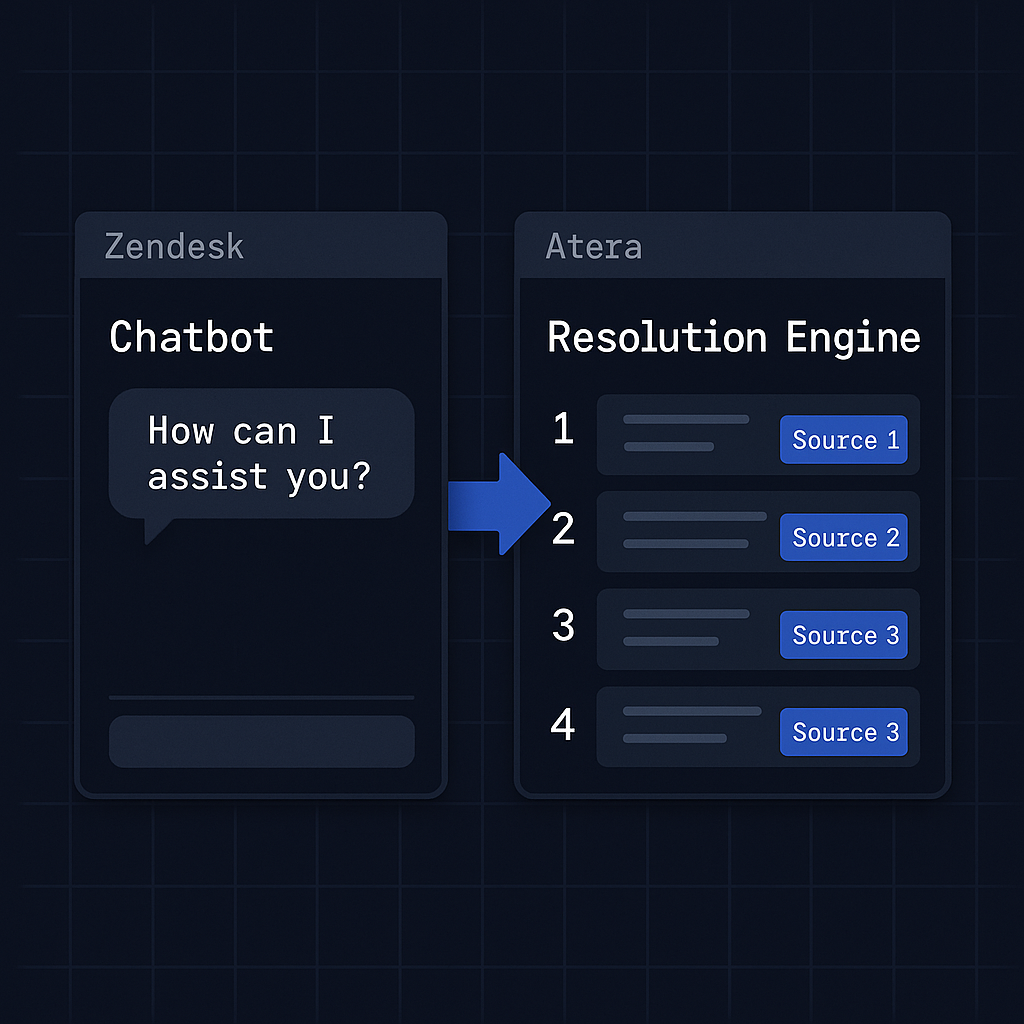
A resolution engine is proactive. It reads the ticket and delivers an answer before anyone asks. And instead of a conversational paragraph, it produces structured steps with source citations — verifiable, auditable, and actionable.
How it differs from copilots
AI copilots like those built into Zendesk or Freshdesk help technicians draft responses to customers. They’re useful, but they operate on a different layer. They help with communication, not resolution.
A resolution engine works upstream of the response. It answers the technical question first: “What are the steps to resolve this issue?” Then your technician can use those steps to solve the problem and communicate the outcome however they prefer.
How it differs from knowledge base search
Your knowledge base has a search bar. The problem is that nobody uses it when a ticket is open. The workflow doesn’t naturally lead to the search page — it leads to the ticket.
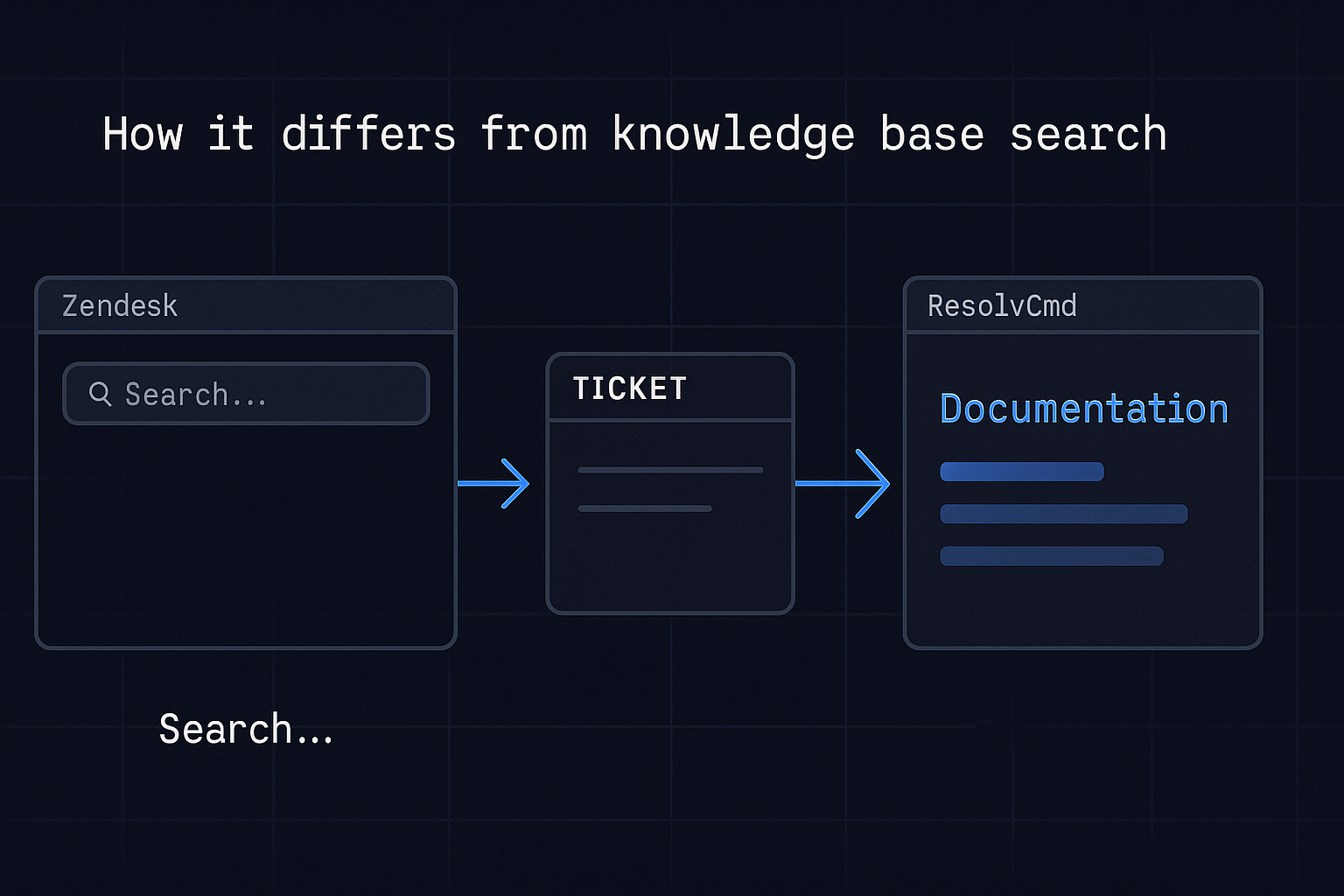
A resolution engine eliminates the search step entirely. It brings the relevant documentation to the ticket, matched against the specific context of what the user is reporting.
What to look for in a resolution engine
Not all AI-powered ticket tools qualify as resolution engines. Here’s what separates a real resolution engine from a rebranded chatbot:
- Connects to your actual documentation — IT Glue, Hudu, Confluence, Google Drive, not just ticket history
- Produces structured output — numbered steps, not paragraphs
- Source citations on every step — you can verify where each recommendation came from
- Works inside your existing tools — appears in the ticket, not a separate window
- Honest about uncertainty — shows confidence levels and says “I don’t know” when documentation doesn’t cover the topic
The bottom line
A resolution engine doesn’t replace your knowledge base. It activates it. Your documentation becomes a live, working part of your ticket resolution workflow instead of a reference library that nobody visits.
If your team has invested in documentation but still relies on tribal knowledge to resolve tickets, a resolution engine is the missing link.
Ready to turn your documentation into instant resolutions?
Start Free Trial